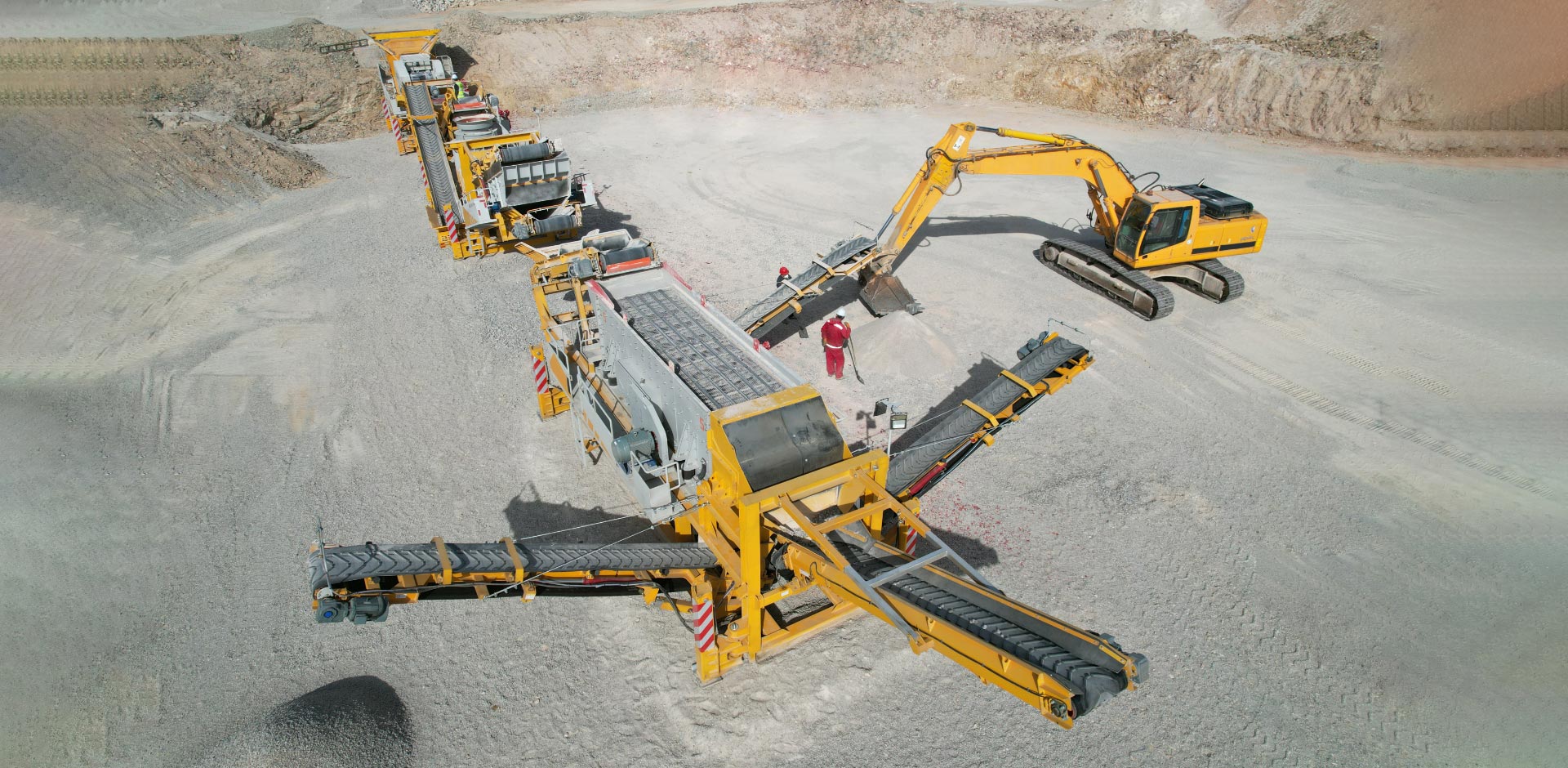
The narrative of Indonesia’s economic ascent is often illustrated by gleaming new airports, sprawling industrial estates, and ambitious digital infrastructure projects. However, beneath this visible progress lies a more fundamental, though less celebrated, industrial stratum: the aggregate production sector, specifically stone crushing plants. To relegate these facilities to the status of mere ancillary support is a profound analytical error. They are not passive beneficiaries of growth; they are active, indispensable catalysts. The argument that Indonesia’s infrastructure-led investment boom can proceed at its current velocity without a parallel and strategic expansion of domestic aggregate production capacity is untenable. Stone crusher plant form the material bedrock of development, and their proliferation directly influences the cost, pace, and geographical distribution of national economic advancement. This relationship is not incidental; it is causal and merits rigorous examination.
The Foundational Input: Enabling Infrastructure at Scale
The most direct and unambiguous economic contribution of stone crushing plants is their role as the primary material supplier for infrastructure. Without a reliable, localized source of high-quality aggregate, the ambitious goals of the National Strategic Projects (PSN) program encounter an immediate physical constraint.
Cost Containment and Project Viability
The economics of large-scale construction are acutely sensitive to the cost of basic inputs. Transporting bulk materials like crushed stone over long distances is prohibitively expensive, eroding project budgets and jeopardizing financial viability. The establishment of strategically located stone crushing plants, particularly mobile and semi-mobile units, creates localized material supply hubs. This geographic dispersion of production drastically reduces the logistical tail and fuel expenditure associated with aggregate delivery. The resultant cost containment is not a marginal saving; it is a fundamental enabler that allows more kilometers of road, more meters of bridge, and more units of affordable housing to be built within finite government and private capital budgets.

Accelerating Development Timelines
Beyond cost, the pace of development is paramount. Project delays cascade into massive economic opportunity costs. A reliable domestic network of aggregate producers mitigates a critical supply chain risk. It eliminates dependency on unpredictable imports or distant domestic sources vulnerable to logistical disruption. When crushers are positioned proximate to major projects like the new capital city Nusantara or Trans-Sumatra Toll Road segments, they provide a just-in-time material flow that keeps construction schedules on track. This temporal efficiency translates directly into faster asset commissioning, quicker returns on investment, and the earlier realization of public goods like improved transportation networks.
Multiplier Effects: Catalyzing Ancillary Industries and Employment
The economic impact of stone crushing extends far beyond the quarry gate, generating a powerful multiplier effect that radiates through related sectors and the labor market.
The Industrial Ecosystem
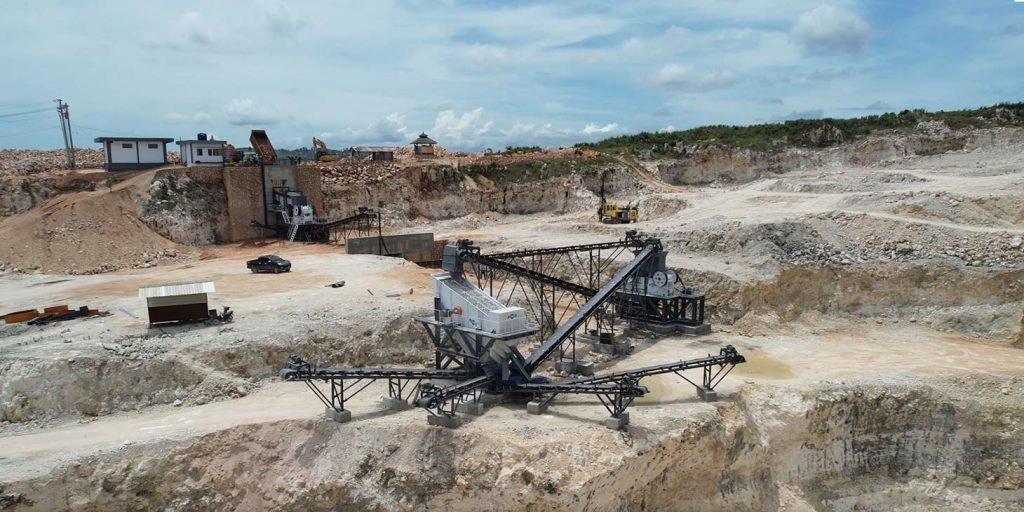
A modern stone crusher plant in Indonesia is not an isolated operation. Its establishment stimulates demand across a spectrum of ancillary industries. It requires heavy equipment from machinery manufacturers and dealers, driving sales for excavators, loaders, and haul trucks. It creates sustained business for maintenance and repair services, spare parts distributors, and tire suppliers. The processed materials themselves feed into concrete batching plants, asphalt mixing facilities, and precast concrete manufacturers, solidifying an integrated domestic construction materials industry. This vertical and horizontal integration strengthens industrial resilience and retains a greater portion of the project’s economic value within the national economy.
Skills Development and Job Creation
The labor implications are substantial and layered. Stone crushing plants generate direct employment in plant operation, maintenance, mining engineering, and site management. These are often skilled or semi-skilled positions that contribute to technical workforce development. Indirectly, the sector supports countless jobs in the equipment supply, transport, and service chains mentioned above. Furthermore, by enabling the construction of industrial parks, manufacturing facilities, and new urban centers, the aggregate sector indirectly facilitates job creation across the entire economy. It provides the physical foundation upon which other businesses and their employment opportunities are built, making it a primary enabler of broad-based job growth.
Strategic Autonomy and Sustainable Resource Management
Finally, a robust domestic stone crushing capacity confers strategic economic advantages and aligns with principles of sustainable, long-term resource stewardship.
Reducing Import Dependence and Currency Outflow
Relying on imported aggregates, or even the imported heavy machinery to produce them, represents a persistent leakage of foreign exchange and a vulnerability in the supply chain. Building a domestic industry around crushing plants—including the manufacturing and servicing of the mobile crusher plants themselves—enhances national self-sufficiency. It keeps capital circulating within the domestic economy, supports the development of local technical expertise, and insulates major projects from global commodity and shipping market volatilities. This strategic autonomy is a critical component of economic resilience.
The Pathway to a Circular Construction Economy
Modern stone crushing technology, particularly mobile crushers, is the key engine for a circular economy in construction. These plants can process demolition waste from urban redevelopment projects, transforming rubble from a landfill burden into a valuable secondary raw material. This practice conserves natural quarry resources, reduces environmental degradation from new mining, and minimizes the urban blight of disposal sites. By investing in rock crushing plant capable of recycling construction and demolition waste, Indonesia can decouple its infrastructure growth from the linear consumption of virgin materials, ensuring that its current building boom does not mortgage its future environmental and resource security. This is not merely an environmental consideration; it is a profound economic strategy for sustainable, cost-effective long-term development.